
📈 Stacking Edges with a Bayesian Mindset
Let’s be honest. When you first start trading, you inevitably go through the "chart-gazing" phase. You discover candlesticks, maybe throw a MACD and an RSI onto your screen, and suddenly you feel like a quantitative genius.
You spend hours drawing arbitrary triangles on price charts until they resemble a Picasso, convinced that the "Golden Cross" of the 50-day and 200-day moving averages is some kind of sacred artifact that guarantees profit.
It’s a comfortable trap. Technicals look like math, and math feels safe. But relying only on technical analysis is a bit like trying to drive a car by only looking at the speedometer. Sure, you know how fast you're going, but you have no idea if you're driving off a cliff. Technical indicators inherently lag price. They tell you what just happened, not what will happen.
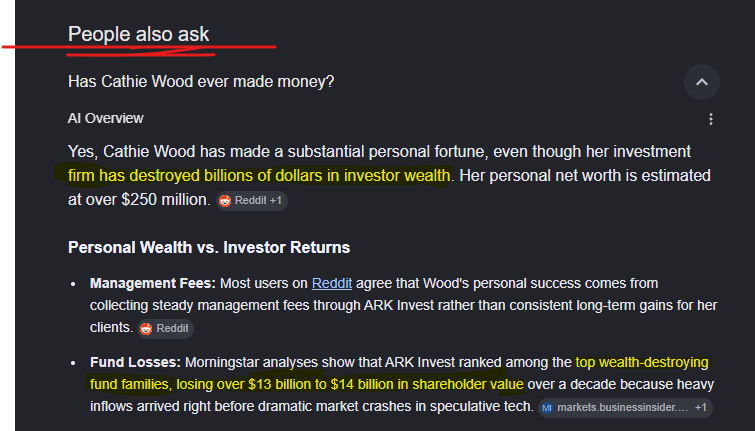
Just look at Cathie Wood’s ARKK ETF. During the pandemic, retail traders bought every technical dip on the premise that "disruptive innovation" only goes up. But they ignored the macro backdrop: zero percent interest rates were acting as rocket fuel for unprofitable tech. When the Federal Reserve aggressively hiked rates, the macro environment shifted completely. Staring at an "oversold" RSI didn't save purely technical traders from a brutal 70%+ drawdown.
To actually build conviction—to trade with a structural edge rather than just hoping a line bounces off another line—you need a multidimensional approach. This is where adopting a solid, Bayesian hedge fund mindset comes into play—meaning you start with a baseline thesis and constantly update your probabilities as new real-world evidence arrives. We aren't looking for a secret formula; we are learning how to think about the market systematically so you can generate your own unique ideas.
Let's break down this systematic process, how to actually generate trade ideas, and why your exit strategy shouldn't just rely on a squiggly line.
🌍 Step 1: Idea Generation (Look Out the Window)
The first step of generating an edge has absolutely nothing to do with charts. It’s about viewing the world, gathering data, and identifying actionable themes. You can approach this from two directions:
- 🦅 Top-Down (Macro): Look at global trends and monetary policy. When money is free, speculative tech (like the components of ARKK) thrives. When liquidity tightens, cash flow and hard assets become king.
- 🔬 Bottom-Up (Micro): Look at behavioral shifts. Are institutions finally adopting Bitcoin? Are traditional software companies pivoting to digital asset treasuries?
- 🧠 Lateral Thinking: The magic happens when you connect the dots laterally. Let’s look at the institutional adoption of Bitcoin over the last few years. You could just buy spot Bitcoin ETFs. But what if you wanted an aggressive, leveraged corporate proxy? You engage in lateral thinking and look at MicroStrategy. They aren't just holding Bitcoin; they historically issued convertible debt and equity at a premium to buy more Bitcoin, creating a leveraged flywheel effect. You've generated a unique, fundamentally sound idea.
🧱 Stacking Edges: The Multidimensional Approach
Idea generation is just step one. If you buy a stock purely based on an idea, you aren't trading; you're guessing. To build actual conviction, you need to pass your idea through a rigorous, Bayesian-style filter. You are looking to take your initial thesis and update its probability of success by "stacking your edges."
- 💡 Idea Generation: You have your Bitcoin/MicroStrategy thesis.
- 📊 Fundamental Analysis: You look under the hood. You don't just look at their software revenue; you track the "NAV premium" (the premium their stock trades at relative to their Bitcoin holdings). Is the market valuing their Bitcoin at a 2x premium? Can they still issue debt cheaply to continue their strategy?
- 📐 Technical Analysis: Now you look at the chart. Not to decide what to trade, but when to trade it. Technicals are your timing mechanism. They help you define a logical entry point during a market pullback and establish a clear line in the sand for where your timing is proven wrong.
- 🎭 Trading Psychology: Is the trade hopelessly crowded? Is the crypto "Fear & Greed Index" at max euphoria? If mass positioning is overwhelmingly long, there might be no buyers left to push the price higher.
- 🛡️ Risk Management: You size your position so that if you are completely wrong, you live to trade another day.
When you have an idea that makes logical sense, the fundamentals to back it up, a technical setup for a low-risk entry, and the psychology of the market in your favor—that is a true, stacked edge.
🤖 The Good News: You Don't Need to be a Quant
If the phrase "fundamental analysis" makes you want to close this tab and go back to drawing triangles, relax. You do not need to become a hyper-complex, spreadsheet-crunching quant to pull this off.
Ten years ago, calculating NAV premiums or aggregating macro liquidity data required an expensive Bloomberg terminal and an unhealthy relationship with Microsoft Excel. Today? You just need basic common sense and some decent AI prompting.
You don't need to build the model; you just need to know what questions to ask. You can simply prompt your AI: "What is the historical NAV premium of MicroStrategy, and what typically happens to the stock when that premium compresses?" or "Summarize the impact of a rising interest rate environment on long-duration tech ETFs." Common sense points you in the right direction; AI does the heavy lifting. This combination levels the playing field, allowing everyday traders to get in front of massive, structural market moves that used to be reserved entirely for Wall Street.
🚪 The Exit: When the Story Ends
Here is the most important lesson for a serious beginner: Knowing when to sell.
Most beginners sell when a technical indicator tells them it's "oversold" or when they've hit an arbitrary 10% profit target. But if you built your trade on a multidimensional premise, your exit needs to respect that premise.
You exit the trade when the original reason for the trade is no longer present.
Let’s go back to our MicroStrategy example. Your fundamental thesis for holding the stock was their aggressive strategy: the stock historically traded at a massive premium to its Net Asset Value (NAV), allowing the company to endlessly issue stock to buy more Bitcoin, swearing to never sell a single satoshi.
But imagine the macro environment shifts. The stock's premium to NAV compresses to 1x, meaning they can no longer accretively issue equity. To fix their capital structure, the board suddenly shifts gears and authorizes a "Bitcoin monetization program"—meaning they are now optionally selling chunks of their Bitcoin treasury to pay down debt.
What do you do?
You don't look at the MACD. You don't check if the 50-day moving average is acting as support. You don't hold on because the stock "feels" like it will bounce.
The story is dead. The fundamental catalyst that gave you conviction in the first place—the endless accumulation flywheel and the promise to never sell—has been permanently altered. The move is over. You close the trade, take your capital, and walk away.
🎯 The Takeaway
Trading isn't about out-mathing the market with a secret combination of chart indicators. It's about developing a robust, probabilistic framework for decision-making.
Start generating ideas based on reality. Filter them through fundamental health using the AI tools at your disposal. Use technicals as a sniper rifle to time your entries, and use risk management as your bulletproof vest. And above all, if the macro environment shifts or the core thesis breaks, have the cold, robotic discipline to hit the sell button.
The squiggly lines on your screen will still be there tomorrow. Just make sure you understand the real-world machinery driving them.